Keene NH's New ADU Law: What "By Right" Still Doesn't Guarantee
August 27, 2026
August 27, 2026
Somewhere in Keene right now sits a finished accessory dwelling unit with nobody living in it. Not because the market doesn't want another rental in this city. Not because the unit failed an inspection. It sits empty because of a single condition written into the rule that made it legal in the first place: the property owner has to live there too, and in this case, they no longer do. The resident who pushed Keene to reform its ADU rules described this exact situation in a blog post, and it is worth sitting with before anyone repeats the headline that Keene "made ADUs legal by right" as if that settles the matter.
That headline got more true on July 1, 2025, than at any point in the city's history. New Hampshire's revised accessory dwelling unit statute, RSA 674:72, now forces every city and town in the state to allow at least one ADU on any lot with a single-family home, without a conditional use permit or a public hearing. Keene didn't wait for the state to force its hand. The city had already loosened its own rules back in 2023. But the 2023 version and the 2025 version are not the same animal, and the space between them is exactly where a buyer's assumptions get expensive.
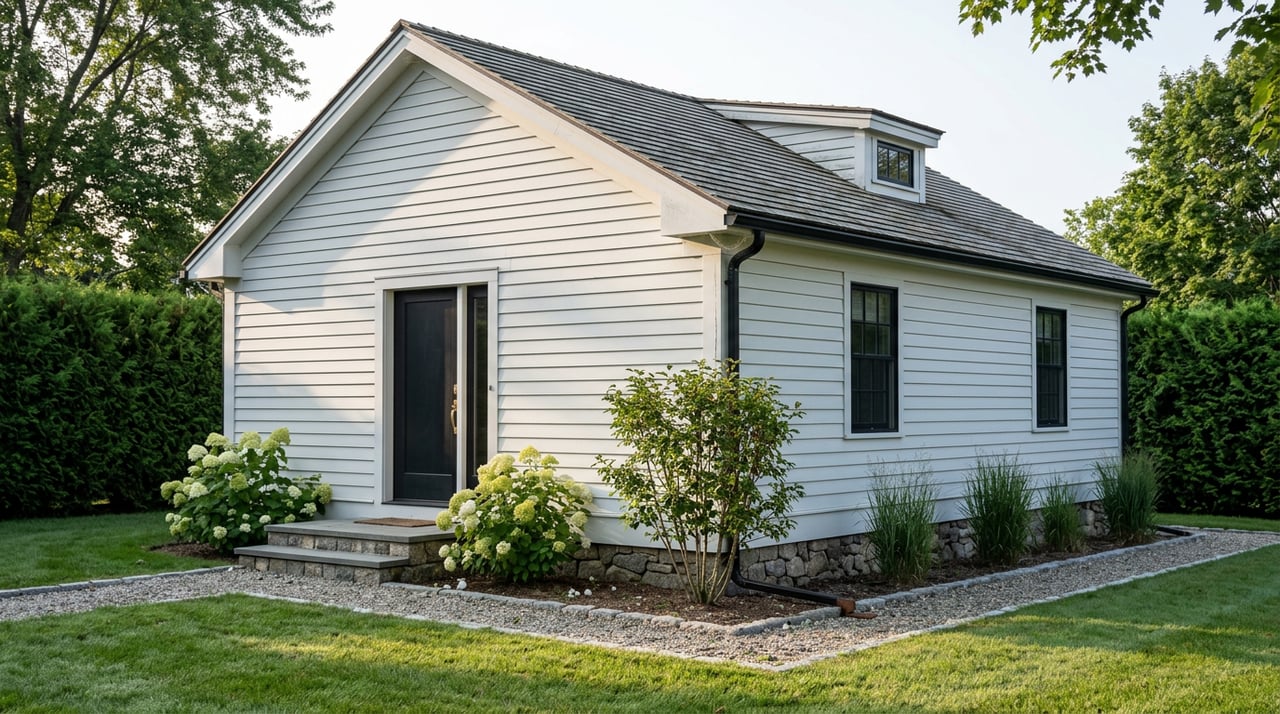
Before 2023, Keene treated ADUs the way a lot of small New England cities did: narrowly, and case by case. That year's local ordinance opened the door wider by allowing attached ADUs into most zoning districts, but it kept detached units, the kind converted from an old carriage house or a standalone garage, confined to the city's rural and agricultural zones. Anyone hoping to convert a backyard barn near downtown Keene was out of luck no matter how sound the structure.
Then the state stepped in. Effective July 1, 2025, RSA 674:72 erased that geographic limit statewide. A municipality can no longer confine detached ADUs to certain zones if it allows single-family homes there at all. Keene's own community development page now describes ADUs as decoupled from zoning entirely and allowed by right on any lot with a single-family home in the city. That's a genuine shift, and a meaningful one for anyone eyeing a fixer-upper with outbuildings that predate this decade.
But "by right" describes the permitting process, not the physical building. Three details buried in the same law explain why the phrase deserves more scrutiny than it usually gets.
| Keene's 2023 Local Rule | Statewide Rule Since July 2025 | |
|---|---|---|
| Detached ADUs | Rural and agricultural zones only | Allowed on any lot with a single-family home |
| Approval process | No conditional use permit, but zone-restricted | By right, no discretionary hearing required |
| Parking | One dedicated space required | Municipal parking authority now limited by state law |
| Occupancy | Owner must live in the main house or the ADU | Municipality may still require owner occupancy, but can't specify which unit |
The state's own floor and ceiling: no ADU smaller than 750 square feet, none larger than 950, unless Keene decides otherwise.
That size band matters more in a city like Keene than it would somewhere with newer housing stock. Carriage houses and standalone garages built a century ago were sized to store hay and wagons, not people, and their dimensions rarely land inside a 200-square-foot window by accident. A homeowner picturing a compact rental in an existing outbuilding may find it falls short of the 750-square-foot floor and needs an addition to qualify. A homeowner picturing a full two-bedroom in-law suite will find the 950-square-foot ceiling caps that plan unless the city chooses to grant an exception it has no obligation to give.
The law does let a homeowner convert an existing structure into an ADU even if that structure doesn't meet today's dimensional standards, but only if the structure existed on or before July 1, 2025. The New Hampshire Municipal Association's own guidance calls this section of the statute ambiguous and tells municipalities to consult legal counsel before approving conversions case by case.
What that means in practice: two nearly identical barns in the same Keene neighborhood, one converted last spring and one still waiting on an answer, could get different rulings from the same planning office depending on when each structure was built and how the city interprets a sentence its own legal advisors describe as unclear.
Even a straightforward, code-compliant ADU can still land in front of the Zoning Board of Adjustment if it trips a different wire entirely. A case on the board's May 2026 agenda, involving a Whitcomb's Mill Road property where an ADU was already under construction, needed a variance tied to the lot's proximity to White Brook before the board would sign off, and it still passed only after a formal vote. By right removed the conditional use hearing. It didn't remove every reason a project can still end up back in front of the board.
Keene's 2023 ordinance required owner occupancy of either the main house or the ADU. State law still permits a city to keep that requirement, it just can't dictate which of the two units the owner has to occupy. Whether Keene's current rules still carry that condition isn't spelled out on the city's own summary page, and that gap is itself useful information. Before assuming an ADU can be rented to a tenant while the owner lives elsewhere entirely, confirm directly with Keene's Community Development office. That single confirmation is the difference between a rental that performs the way the math suggests and one that sits finished and empty for the same reason as the case that opened this piece.
Local rent data from Rentometer puts Keene's average one-bedroom rent in the $1,500s and two-bedroom rent near $2,000 as of March 2026. New Hampshire's housing toolbox for municipalities estimates ADU construction typically running $50,000 to $200,000 depending on scope, whether the project is a garage conversion or new construction from the ground up. Line those figures up and an ADU built at the state's 950-square-foot ceiling, renting near the two-bedroom average, can look like a reasonable long-term addition to a property's value, particularly for downsizers weighing an in-law suite or small investors comparing a Monadnock-area purchase against other options.
The occupancy question above is exactly where that math gets tested against reality, and it's worth answering before the framing goes up, not after the ceiling is finished.
For years, the hardest part of building an ADU in Keene was getting permission. That part is largely settled now. What's left is everything the state law didn't touch: whether the structure already on the property qualifies for the older-building exemption, whether the unit that's legal to build is the size a buyer actually pictured, and whether an occupancy rule that has already left at least one Keene ADU sitting empty applies to this one too. None of that shows up in a headline that says ADUs are now legal by right. All of it shows up on a closing table.
Does the new law apply to a garage I already own? Only if the structure existed on or before July 1, 2025. Converting a structure built after that date follows current dimensional standards without the older-building exemption, per the Municipal Association's guidance.
Can I build more than one ADU on a single property in Keene? State law guarantees one ADU per lot by right. A second unit remains at the city's discretion.
Does "by right" mean I can skip the building permit? No. It removes the discretionary zoning hearing, not the building permit and inspection process that still applies to any ADU project in the city.
If you're looking at a Keene property with an old carriage house, a detached garage, or enough yard for new construction and trying to figure out what's actually buildable under the current rules, North New England Real Estate Group can walk the property with you and help you ask the city the right questions before you make an offer. Contact us for a free local market consultation and home valuation.
Stay up to date on the latest real estate trends.
We'd love to hear from you! Whether you're buying, selling, or just exploring your options, we're here to provide answers, insights, and the support you need. Contact us and start planning your next move.